How long does it take to build a pool? The build, stage by stage
Eight to twelve weeks for a typical residential pool. What happens in that time explains why it shouldn't be rushed.
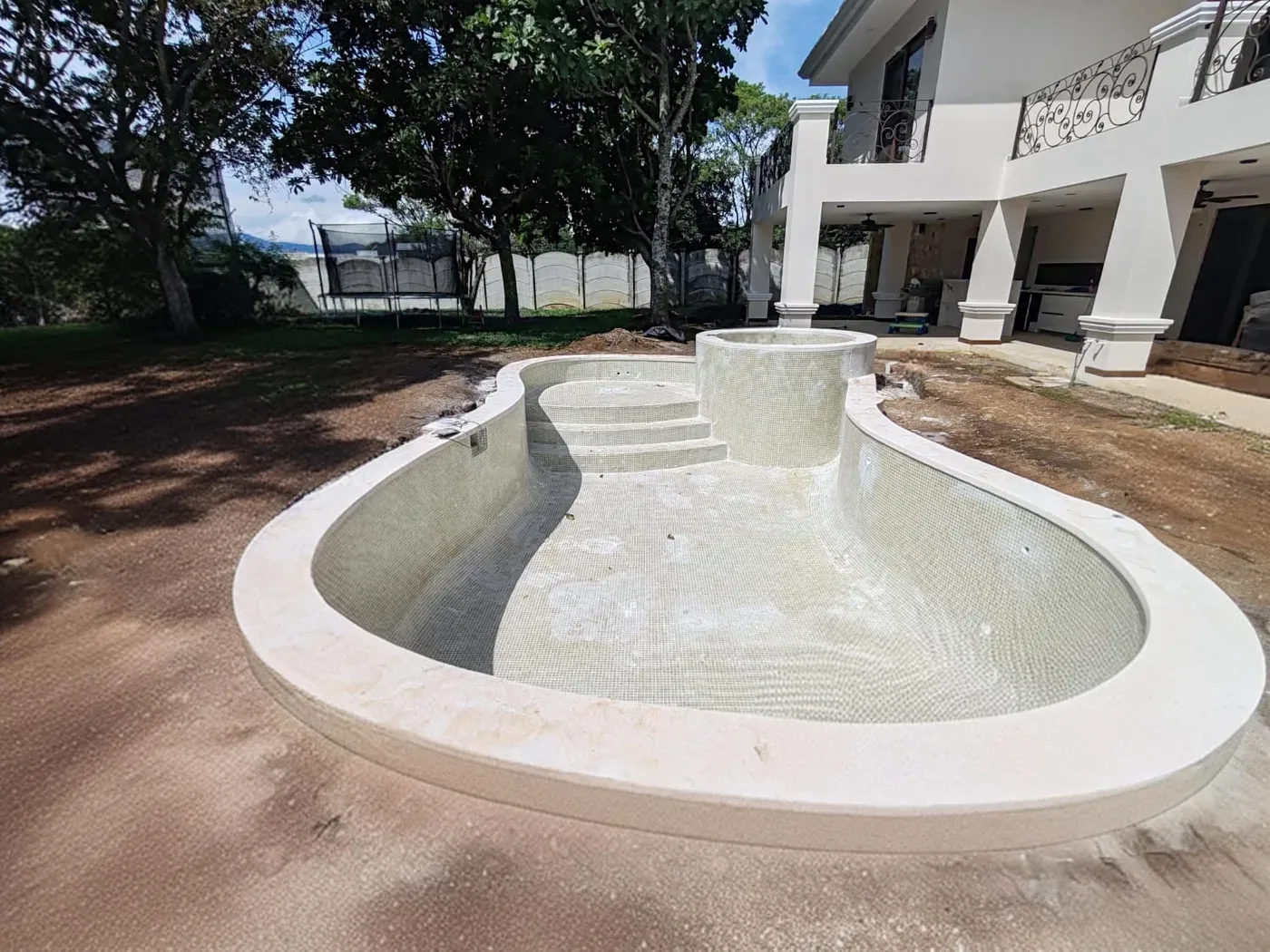
- A typical residential pool takes 8 to 12 weeks of construction, depending on the site, the size and the finishes. Design and permits come first and are counted separately.
- What moves the date most: rain, site access, special finishes and changes during construction.
Before the build: design, budget and permits
It all starts with a site visit. From it come a photorealistic 3D design, so you can see the pool on your property before it is built, and a budget with scope, timeline and costs in writing. The schedule is delivered together with the budget.
Building permits are processed before work begins and their timing depends on each municipality, so they are not part of the construction weeks. Ask from the start who handles them and how long they are taking in your area.
The build, stage by stage
Layout and excavation
The pool is marked on the ground and excavated. This is the stage that depends most on the site: the soil, any groundwater and, above all, how machinery gets in and how the soil gets out.
Steel and plumbing
The steel mesh that will work inside the concrete is assembled, and the pipes, drains and light conduits are set in place. Everything that ends up inside the concrete is decided here; changing it later means breaking it.
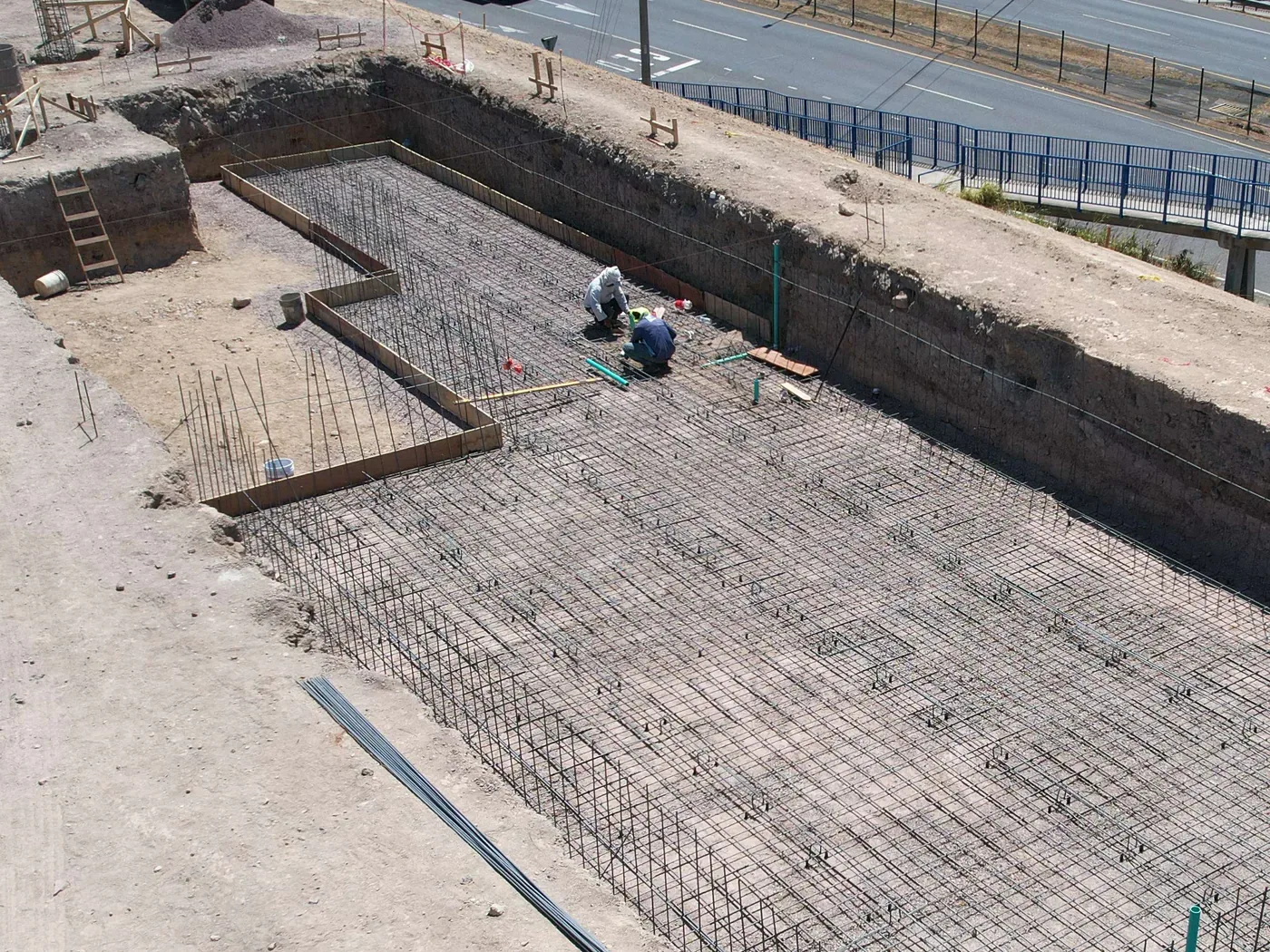
Steel reinforcement before the pour. Concrete pour
The shell is poured in reinforced concrete, with structural calculations. Then comes a period you can't see and can't skip: the concrete needs to cure and gain strength before it receives the finish.
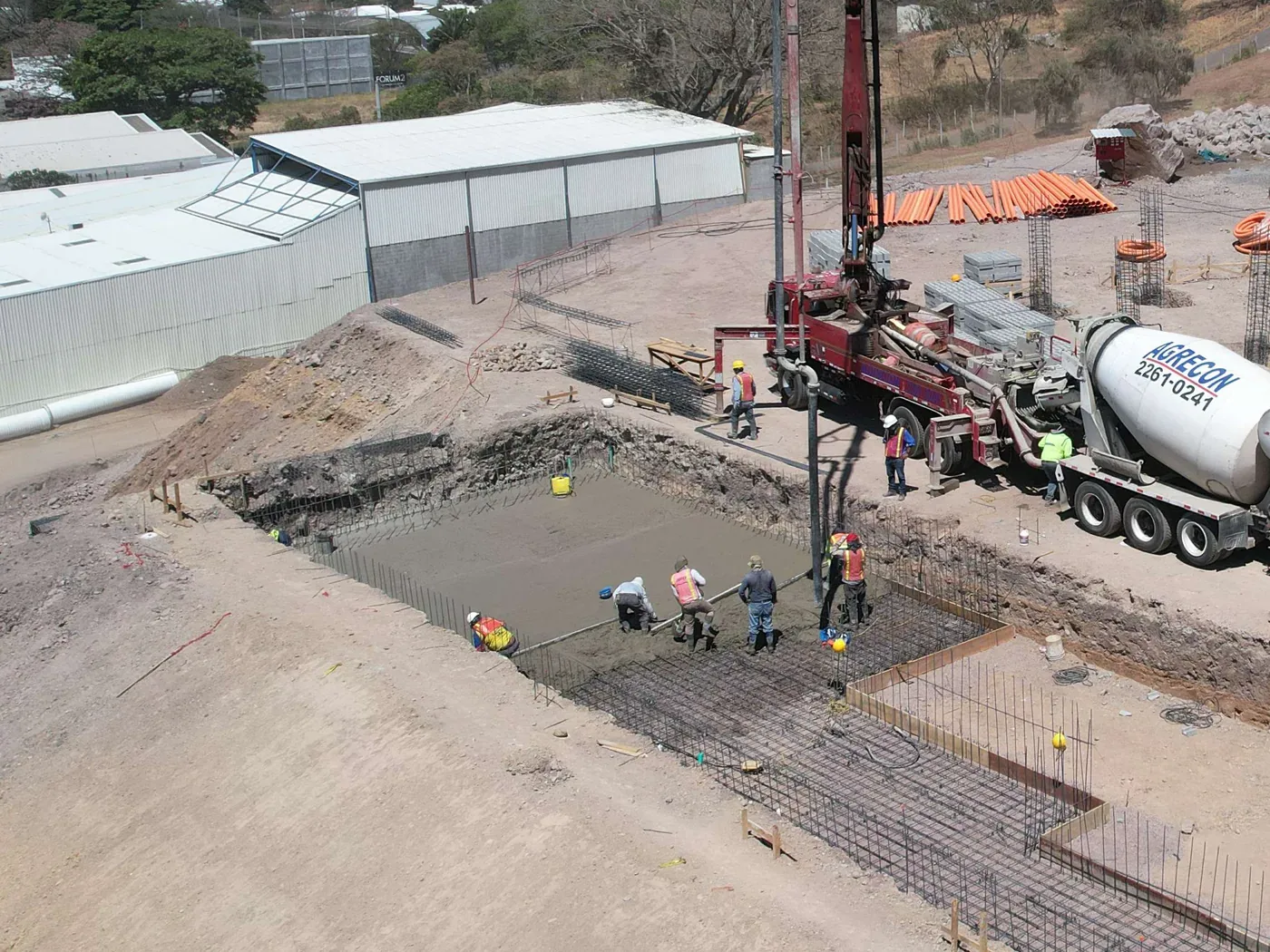
Concrete pour with a pump. Finishes
The shell finish and the coping are installed. It is manual, detailed work: stone set piece by piece takes longer than mosaic on mesh sheets.
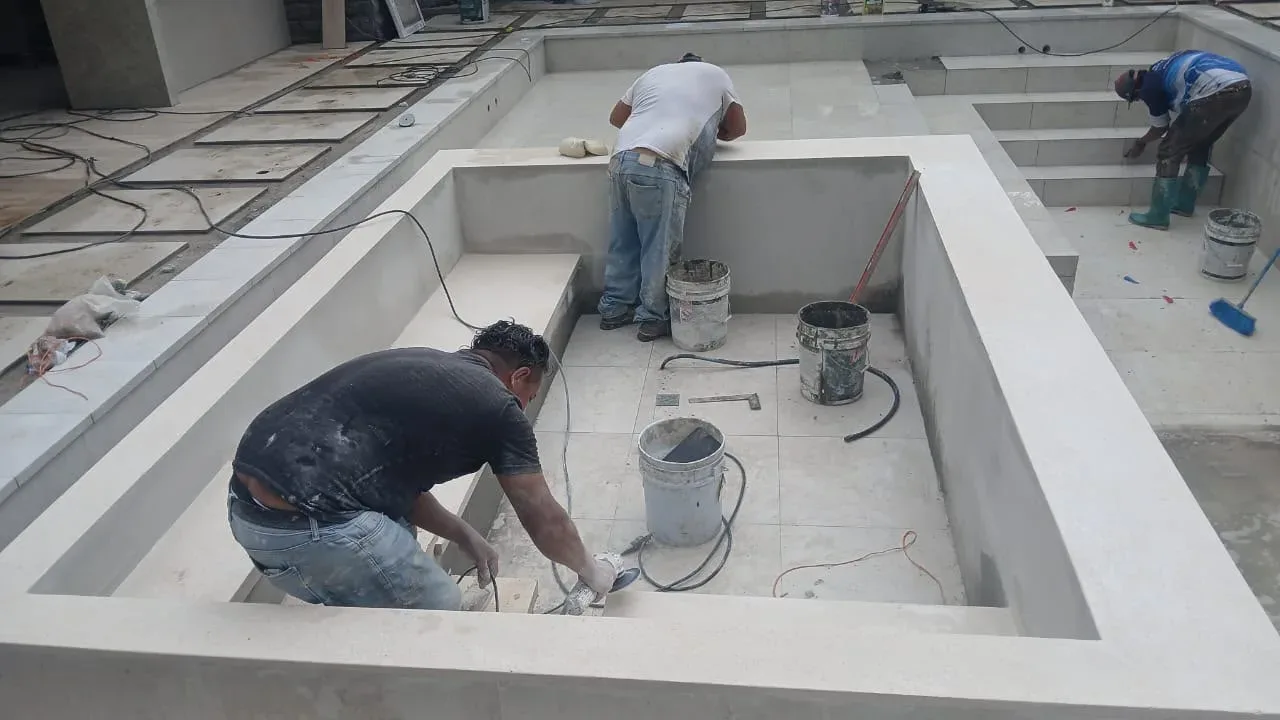
Finish work inside the shell. Equipment
The pump, filter and lighting are installed and connected and, if the project includes them, heating and control from your phone.
Filling and start-up
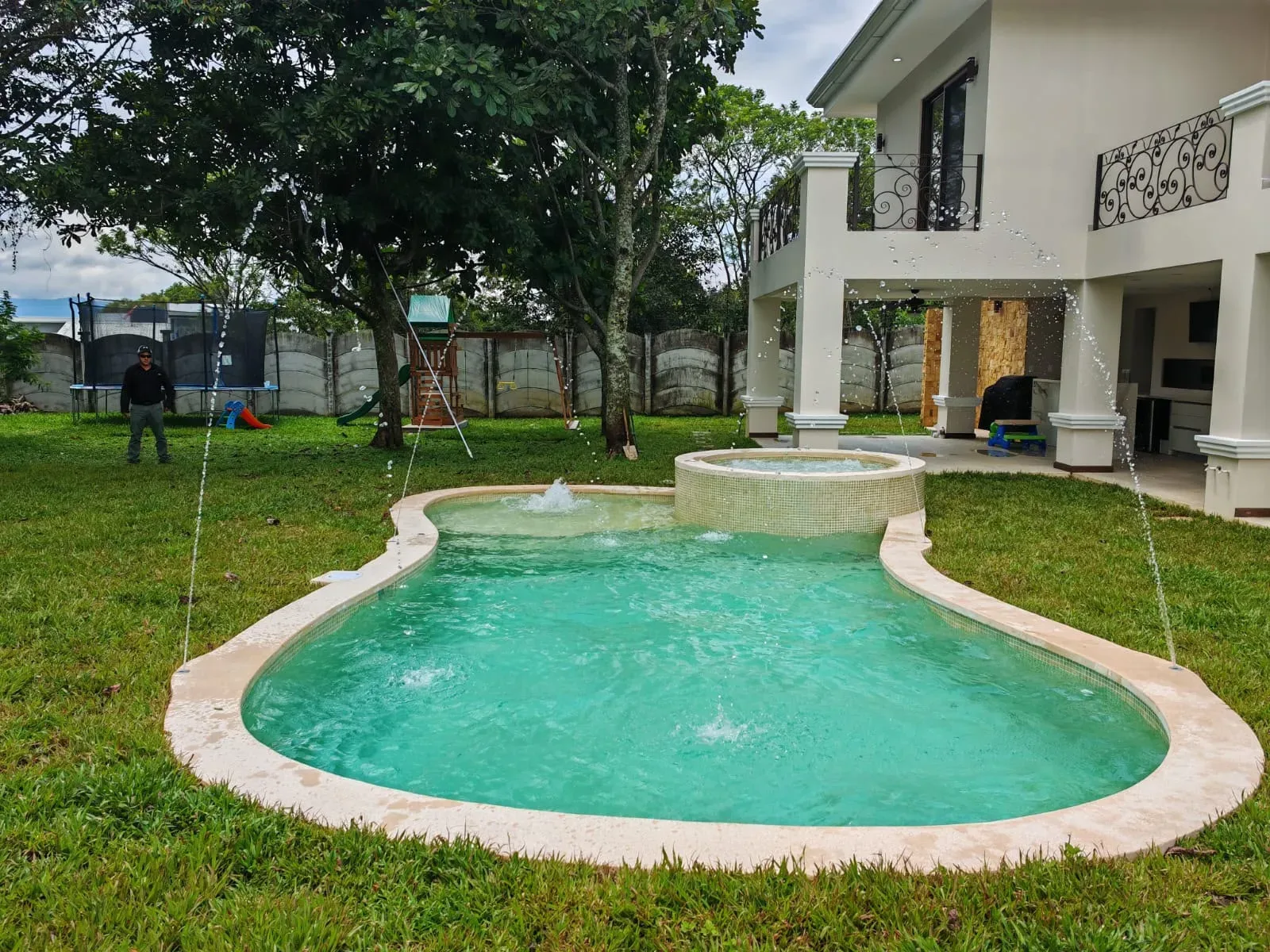
The pool is filled, the equipment is started, the water is balanced and the owner is shown how to use it. Delivery includes start-up and training.
What stretches a build
| Factor | Why it matters | What can be done |
|---|---|---|
| Rain | In the rainy season there are days when you can't excavate or pour. | Schedule excavation and the pour for the dry months, or leave slack in the schedule. |
| Site access | If machinery can't get in, the soil comes out by hand. | Settle access during the site visit, before quoting. |
| Special finishes | Natural stone and structural glass are ordered in advance and installed more slowly. | Choose the finish at the start, not mid-build. |
| Mid-build changes | Moving a step or adding a spa after the pour means demolition. | Lock the design in 3D, before excavating. |
How to tell if a schedule is realistic
- It is in writing and separates the stages.
- It says what happens if it rains.
- It includes concrete curing time. Cutting it is the most expensive way to gain a week.
- It says who answers for each stage. At Jireh the work is done by our own crew, with permanent supervision until delivery.
Want a date for yours? The site visit is the first step: pool design and construction. And if you are still at the numbers stage, read what a pool costs in Costa Rica.
Frequently asked questions
Can you build during the rainy season?
Yes. Rain means protecting the excavation and may push the pour by a few days, which is why the schedule has to account for it from the start.
How long does a remodel take?
A typical finish remodel takes 2 to 4 weeks, depending on scope. See pool remodeling.
When can the pool be used?
From delivery: it is handed over full, with the equipment running and with training on how to use it.